

Dental insurance verification services help dental practices confirm patient eligibility, plan benefits, deductibles, waiting periods, frequencies, limitations, and estimated patient responsibility before treatment. A clear verification process reduces front desk stress, improves patient communication, supports cleaner billing, and helps practices avoid preventable claim problems.
For busy dental offices, outsourcing verification can create a more reliable workflow without adding in-house staff.
Quick checklist for dental insurance verification
Use this checklist before every appointment that involves insurance.
| Verification item | Why it matters |
|---|---|
| Patient name and date of birth | Confirms the patient matches the payer record |
| Subscriber information | Prevents dependent and policy mismatch issues |
| Insurance carrier and payer ID | Helps billing teams submit claims correctly |
| Effective date and active status | Confirms whether coverage is currently active |
| Annual maximum | Shows how much benefit may remain |
| Deductible and amount met | Helps estimate patient responsibility |
| Preventive, basic, and major coverage | Supports treatment estimates |
| Waiting periods | Helps avoid surprise non-covered treatment |
| Frequency limitations | Important for exams, cleanings, X-rays, crowns, and fluoride |
| Missing tooth clause or exclusions | Important before major restorative treatment |
| Coordination of benefits | Needed when the patient has secondary insurance |
| Reference number or rep name | Helps document the verification trail |
The American Dental Association notes that eligibility and coverage are usually verified through the payer portal or by calling the number on the patient’s insurance card, but payer information may not always be fully current. That is why practices should document what they verified, when they verified it, and where the information came from.
Why dental insurance verification creates problems for dental practices
Insurance verification sounds simple until the schedule gets full.
A dental front desk team may need to answer calls, greet patients, collect forms, manage cancellations, check eligibility, explain benefits, and support treatment coordinators at the same time. When verification happens late or gets rushed, small details can turn into bigger problems.
Common issues include:
- Inactive coverage found after the visit
- Wrong subscriber details
- Missing deductible information
- Incorrect remaining annual maximum
- Unclear frequency limits
- Confusion about waiting periods
- Poor documentation in the practice management system
- Unexpected patient balances
- Delayed or denied claims
- Frustrated patients who expected a different cost
These issues affect both patient experience and revenue cycle performance. A patient may accept treatment based on unclear benefits, then receive a balance later. The billing team may spend extra time correcting claims, calling payers, or explaining balances. The practice loses time that could have been used for care, scheduling, collections, or growth.
What are dental insurance verification services?
Dental insurance verification services are administrative support services that confirm a patient’s dental insurance eligibility and benefits before the appointment or treatment visit.
A verification team reviews patient insurance information, checks payer portals or contacts carriers, documents benefits, and updates the dental office with clear notes. The goal is to give the practice a more accurate view of coverage before the patient sits in the chair.
Dental insurance verification services may support:
- New patient eligibility checks
- Returning patient reverification
- Breakdown of benefits
- Preventive, basic, and major coverage details
- Deductible and annual maximum checks
- Waiting period review
- Frequency limitation review
- Secondary insurance coordination
- PPO plan detail documentation
- Treatment-specific benefit checks
- Verification notes inside the practice management system
What information should be verified?
A strong dental insurance verification process should check more than active status.
Active coverage only tells the practice that the plan exists. It does not explain whether the planned treatment is covered, what limitations apply, or what the patient may owe.
A complete verification should review:
| Category | Details to check |
|---|---|
| Patient details | Name, date of birth, relationship to subscriber |
| Subscriber details | Subscriber name, ID, date of birth, employer if needed |
| Plan status | Active status, effective date, termination date if available |
| Benefits | Preventive, basic, major, orthodontic if relevant |
| Financial details | Deductible, deductible met, annual maximum, remaining benefits |
| Treatment limits | Frequencies, waiting periods, age limits, downgrades, exclusions |
| Claim details | Payer ID, mailing address when needed, electronic claim details |
| Documentation | Portal screenshot policy if allowed, call reference, rep name, date checked |
What dental verification does not guarantee
Insurance verification does not guarantee payment.
Coverage can depend on payer rules, plan documents, patient eligibility at the time of service, exclusions, coordination of benefits, claim filing, clinical documentation, medical necessity rules, and other factors. Practices should treat verification as an estimate support process, not a promise of payment.
This is important for patient communication. The team should explain that insurance estimates are based on available payer information and final payment depends on claim review by the insurance carrier.
Dental insurance verification process for practices
A repeatable process helps the team avoid missed details.
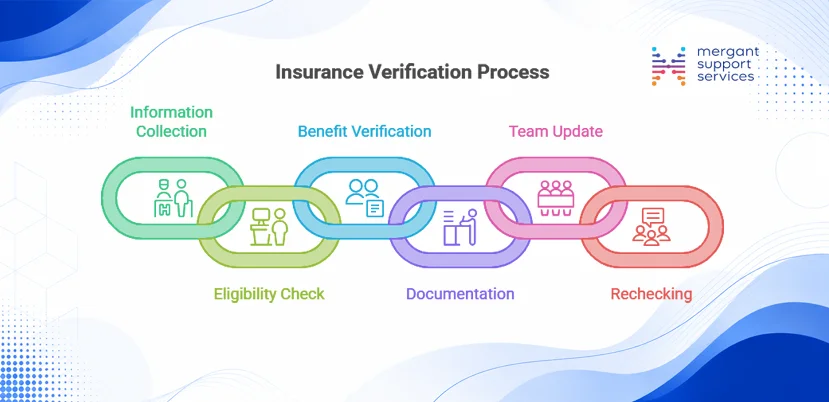
Step 1: Collect accurate patient and policy information
Start with clean data.
Ask the patient for:
- Full legal name
- Date of birth
- Subscriber name
- Subscriber date of birth
- Member ID
- Group number
- Insurance carrier name
- Front and back of insurance card
- Secondary insurance details, if applicable
Small data errors cause big delays. A wrong member ID, misspelled name, or outdated card can waste staff time and delay verification.
Step 2: Check eligibility before the appointment
The best time to verify insurance is before the patient arrives.
For new patients, verification should happen before the first visit whenever possible. For returning patients, the practice should recheck benefits when the patient changes insurance, when a new year starts, or when treatment planning requires updated benefit details.
Many practices verify at least 24 to 72 hours before the appointment. The right timing depends on schedule volume, payer access, staffing, and the type of visit.
Step 3: Verify benefits for planned treatment
Benefit verification should match the visit type.
For a hygiene visit, the team may need preventive coverage, exam frequency, cleaning frequency, X-ray frequency, deductible rules, and remaining maximum.
For restorative treatment, the team may need basic or major coverage, waiting periods, downgrades, missing tooth clause, crown frequency, buildup coverage, and remaining benefits.
For periodontal visits, the team may need scaling and root planing coverage, perio maintenance frequency, history requirements, and documentation needs.
Step 4: Document coverage details clearly
Good verification only helps if the team can read and use it.
Verification notes should be clear, consistent, and easy to find. Avoid vague notes like “insurance active” or “benefits checked.” The treatment coordinator and billing team need specific details.
A useful note may include:
- Date verified
- Source, such as portal or phone call
- Rep name or reference number when available
- Active status
- Effective date
- Deductible and amount met
- Annual maximum and amount used
- Coverage percentages
- Frequencies
- Waiting periods
- Special exclusions
- Secondary insurance notes
Step 5: Update the team before the patient arrives
Insurance information should reach the right people before the appointment.
The front desk needs to know if coverage is inactive. The treatment coordinator needs benefit details for estimates. The billing team needs accurate payer information. The clinical team may need to know if certain documentation could support the claim.
A strong workflow prevents last-minute surprises.
Step 6: Recheck when treatment changes
Treatment plans often change after the exam.
If the dentist changes the procedure, adds treatment, or recommends a different plan, the team may need to verify benefits again. A patient may have coverage for one service but not another. A frequency limit may apply. A deductible may change the estimate.
Business impact of poor dental insurance verification
Poor verification creates operational and financial pressure.
It can affect:
| Area | Impact |
|---|---|
| Front desk workflow | More payer calls, more patient questions, more interruptions |
| Patient experience | Surprise balances, unclear estimates, lower trust |
| Billing accuracy | More claim corrections and follow-up work |
| Collections | Higher patient balance confusion |
| Treatment acceptance | Patients hesitate when costs are unclear |
| Staff workload | More stress for already busy teams |
| Revenue cycle | More preventable delays and avoidable rework |
Dental practices do not need a perfect system to improve. They need a consistent system.
When verification becomes structured, the team can move faster. Patients get clearer estimates. Billing teams receive better information. Office managers gain more control over the schedule and revenue cycle.
Need Help Finding Verification Gaps?
Improve Your Dental Insurance Verification Workflow
Mergant Support can review your dental insurance verification process and show where your team may be losing time, missing details, or creating avoidable billing friction.
Book a Free Workflow ReviewIn-house vs outsourced dental insurance verification
Some practices handle verification fully in-house. Others outsource part or all of the process.
The right choice depends on schedule volume, team capacity, payer complexity, budget, and how much administrative work the practice wants to remove from the front desk.
| Option | Best for | Challenges |
|---|---|---|
| In-house verification | Small teams with low patient volume and trained staff | Staff interruptions, limited time, inconsistent documentation |
| Outsourced verification | Busy practices that want consistent support without hiring more employees | Requires onboarding, clear SOPs, and communication standards |
| Hybrid model | Practices that want external help for high-volume days or new patients | Needs clear division of responsibility |
| Software-assisted verification | Practices with strong internal teams and good payer integrations | May not capture every benefit detail or payer-specific limitation |
Outsourcing does not remove the need for internal oversight. It gives the practice a dedicated support layer that can handle repetitive verification work with a structured process.
Dental insurance verification services vs software
Dental insurance verification software can help practices check eligibility faster. It may reduce manual portal checks and help teams access basic benefit details.
But software and services solve different problems.
Software helps with speed and automation. A service team helps with detail, follow-up, documentation, payer calls, and workflow support.
| Comparison area | Verification software | Verification service |
|---|---|---|
| Eligibility checks | Often strong | Strong |
| Detailed benefit breakdowns | Varies by payer and system | Strong when process is well managed |
| Phone calls to payers | Usually limited | Yes, if included |
| Human judgment | Limited | Yes |
| Treatment-specific review | Varies | Yes |
| Documentation support | Varies | Yes |
| Staff workload reduction | Partial | Stronger for busy teams |
A dental practice may use both. Software can support faster checks, while a trained verification team handles complex cases and detailed benefit documentation.
When should a dental practice outsource verification?
A practice should consider outsourcing dental insurance verification when verification work starts to affect patient flow, staff morale, billing quality, or treatment presentation.
Common signs include:
- Front desk staff cannot verify all appointments on time
- Patients often ask why their estimate changed
- The billing team spends too much time correcting insurance details
- New patient volume is increasing
- The office manager wants to reduce hiring pressure
- The practice has multiple providers or locations
- Staff turnover affects verification consistency
- The team uses different verification notes each time
- Treatment coordinators lack clear benefit breakdowns
- AR follow-up shows repeat eligibility or coverage issues
Outsourcing is not only about cost reduction. It is about building a more stable administrative process.
How to choose the right dental insurance verification company
Not every provider works the same way. A dental practice should choose a company that understands dental workflows, patient communication, billing handoffs, and documentation standards.
Use these criteria before choosing a provider.
Dental workflow experience
The provider should understand dental insurance, not just general healthcare admin support.
They should know how to check eligibility, annual maximums, deductibles, frequencies, waiting periods, and common dental benefit categories.
Clear verification checklist
Ask what checklist they use.
A reliable provider should follow a repeatable process. They should not depend on random notes or incomplete benefit checks.
Practice management system familiarity
The team should be comfortable working with dental practice systems or able to learn your workflow quickly.
They should know how to document benefits in the right place, follow your naming rules, and keep notes easy for staff to use.
Communication process
Ask how they report completed verifications.
Good communication prevents confusion. The provider should define how they flag inactive policies, missing information, urgent cases, and payer issues.
HIPAA-aware operations
Dental practices should evaluate how any outside support partner handles protected health information. HHS explains that HIPAA Rules apply to covered entities and business associates, and HHS also provides guidance on business associate agreements. Practices should confirm compliance needs with qualified advisors and official guidance before sharing patient information with vendors.
Scalable support
A provider should support growth.
If your schedule volume increases, your verification process should not break. Ask whether the provider can handle more patients, more locations, and seasonal changes in volume.
No unrealistic promises
Avoid any provider that guarantees claim payment, approval, or exact revenue improvement.
Verification supports better billing and patient communication, but final insurance payment depends on payer review, plan rules, documentation, and claim processing.
How Mergant Support helps dental practices
Mergant Support provides structured dental insurance verification support for US-based dental practices that want reliable help without adding more in-house staffing pressure.
The goal is simple. Help your team verify benefits earlier, document details clearly, reduce front desk overload, and support cleaner handoffs between scheduling, treatment coordination, and billing.
Mergant Support can help with:
- New patient insurance verification
- Returning patient eligibility checks
- Dental benefit breakdowns
- Deductible and annual maximum checks
- Frequency and waiting period review
- Secondary insurance checks
- Verification note updates
- Daily schedule-based verification support
- Coordination with dental billing workflows
- Support for practices that also need dental billing outsourcing or AR recovery help
Mergant Support is not positioned as a temporary freelancer or random task provider. It works as a professional operational support partner with dedicated processes, clear communication, and service delivery built around practice efficiency.
For practices that feel stretched, this can reduce the pressure of hiring, training, and managing additional admin staff.
FAQs
What are dental insurance verification services?
Dental insurance verification services confirm a patient’s active coverage, benefits, deductible, annual maximum, plan limitations, and estimated responsibility before the appointment or treatment visit.
Why is dental insurance verification important?
It helps dental practices reduce surprise billing issues, improve patient communication, support cleaner claims, and save staff time before appointments.
Is dental insurance verification the same as eligibility verification?
Eligibility verification confirms whether coverage is active. Dental insurance verification is broader because it may include benefits, frequencies, deductibles, waiting periods, annual maximums, and treatment-specific limitations.
Can insurance verification guarantee claim payment?
No. Verification does not guarantee payment. Final payment depends on payer review, plan rules, patient eligibility at the time of service, documentation, and claim submission details.
How often should dental insurance be verified?
Practices often verify before scheduled visits, at the start of a new benefit year, when insurance changes, and before major treatment. The exact timing depends on payer rules, visit type, and office workflow.
What makes Mergant Support different?
Mergant Support combines dental workflow understanding, structured verification processes, and reliable remote operational support for practices that want professional help without increasing in-house staffing burden.
Ready to Improve Your Verification Workflow?
Take Insurance Verification Pressure Off Your Dental Team
Your dental team should not spend every morning chasing insurance details while patients are already walking in.
Mergant Support can review your current verification workflow, identify gaps, and show how outsourced dental insurance verification support can reduce staff pressure and improve front desk efficiency.
Book a Free Dental Verification Review